



Designing an outdoor kitchen is about more than choosing a grill and countertop material. One of the most important, and often overlooked, decisions is layout. The way your outdoor kitchen is arranged determines how easily you can cook, how guests move through the space, and whether the area feels open and inviting or cramped and awkward.
At Treesdale Landscape Company, we design outdoor kitchens that work with your property, your lifestyle, and Western Pennsylvania‘s unique climate. Whether you’re working with a compact patio or a sprawling backyard, choosing the right layout ensures your outdoor kitchen works as an extension of your home.
Below, we break down the most common outdoor kitchen layouts, including their pros, cons, ideal use cases, and space requirements.
One-Wall (Linear) Outdoor Kitchen Layout
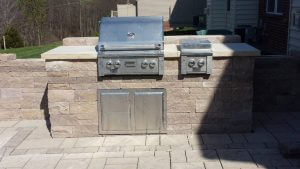
Best for: Smaller patios, narrow spaces, minimalist designs
Typical space needs: 6–12 linear feet, plus clearance for movement
A one-wall outdoor kitchen layout places all appliances, cabinets, and prep space along a single straight run. This is the simplest and most streamlined option, making it a popular choice for homeowners with limited square footage or those who appreciate a clean, modern look.
Why homeowners choose a one-wall layout
The biggest advantage of a linear kitchen is efficiency. Everything is in one place, which makes it easy to move between prepping, grilling, and serving without unnecessary steps. Because utilities like gas, water, and electricity run in a single direction, installation is often more straightforward, which can help control costs.
This layout also keeps the rest of your outdoor living space open. If you plan to include a dining table, fire pit, or lounge seating nearby, a one-wall kitchen leaves plenty of room for those elements to breathe.
Potential drawbacks
While simple and functional, one-wall kitchens do have limitations. Counter space is typically more restricted, which can be noticeable if you enjoy cooking elaborate meals or hosting larger gatherings. Guests also tend to line up behind the cook rather than interacting from multiple sides.
When it works best
A one-wall layout is ideal for:
- Smaller patios or terraces
- Townhomes or homes with limited backyard depth
- Homeowners who want a straightforward grilling and prep area without extra bells and whistles
For many Treesdale clients, this layout serves as a strong foundation that can still feel high-end when paired with quality materials and thoughtful lighting.
L-Shaped Outdoor Kitchen Layout
Best for: Medium to large patios, corner installations, frequent entertaining
Typical space needs: 8–10 feet on one side and 4–6 feet on the return, plus traffic clearance.
An L-shaped layout adds a second run of cabinetry and countertop, creating a natural corner that improves both function and flow. This is one of the most popular outdoor kitchen designs because it balances efficiency with flexibility.
Why homeowners love L-shaped kitchens
The extra leg allows you to separate tasks more clearly. Grilling on one side, prepping or serving on the other. This makes cooking feel more organized and less crowded, especially when multiple people are involved.
An L-shape also naturally defines your outdoor kitchen as its own zone within the yard. One side can face guests or seating areas, making it easier to interact while you cook. Many homeowners use the shorter leg as a serving bar or casual seating area, thereby enhancing the space’s social aspect.
Potential drawbacks
Because this layout spans two directions, it requires more careful planning. Utilities need to be coordinated, and you’ll want to ensure there’s enough clearance so guests aren’t walking directly through your work zone. In tighter spaces, poor planning can make an L-shaped kitchen feel boxed in rather than open.
When it works best
L-shaped kitchens are an excellent fit for:
- Corner patios or yards with natural boundaries
- Homeowners who entertain often and want more prep space
- Outdoor kitchens that include sinks, refrigerators, or side burners
This layout is often a sweet spot for Treesdale clients, offering flexibility without requiring a massive footprint.
Island Outdoor Kitchen Layout
Best for: Large patios, open backyards, highly social spaces
Typical space needs: Enough room for 360-degree access, usually 8–10 feet of clearance around the island
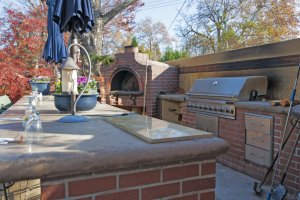
An island layout places the kitchen in a freestanding structure that is open on all sides. This design shifts the focus from efficiency alone to interaction and experience.
Why homeowners choose an island layout
Island kitchens excel at bringing people together. Guests can gather around the island, watch food being prepared, and chat without getting in the way. This makes the layout perfect for homeowners who love hosting parties, family gatherings, or casual cookouts.
Because the island isn’t tied to a wall, it offers flexibility in placement. It can be positioned to highlight a scenic view, align with a pool or patio, or act as the centerpiece of the entire outdoor living area.
Potential drawbacks
Island kitchens require more space and more planning. Without adequate clearance, the area can quickly feel congested. They also tend to involve more materials and longer utility runs, which can increase project complexity and cost.
When it works best
Island layouts shine in:
- Large, open patios or yards
- Homes where entertaining is a priority.
- Outdoor kitchens are designed as a central gathering point.
When designed properly, an island layout can transform your backyard into a true outdoor entertaining destination.
Hybrid & Custom Outdoor Kitchen Layouts
Many modern outdoor kitchens don’t fit neatly into one category. Hybrid layouts, such as an L-shaped kitchen paired with an island or bar, allow homeowners to enjoy the benefits of multiple designs.
Why custom layouts are worth considering
A hybrid approach lets you:
- Separate cooking, prep, and entertaining zones
- Accommodate multiple cooks without crowding.
- Incorporate features like bars, pizza ovens, or extended seating.
Custom layouts are handy for sloped yards, irregular patios, or properties where the landscape itself influences how space can be used.
Things to keep in mind
With customization comes complexity. These layouts require careful design to ensure proper flow, safe clearances, and efficient utility placement. Working with an experienced outdoor kitchen designer is key to avoiding costly mistakes.
How to Choose the Right Layout for Your Outdoor Kitchen
Before settling on a layout, it helps to step back and look at the bigger picture.
Consider your available space.
Measure not just the area where the kitchen will sit, but also how people will move around it. Walkways, seating areas, and access to your home all matter.
Think about how you cook.
Are you a quick griller or a full-meal outdoor chef? The more appliances and prep space you need, the more critical layout flexibility becomes.
Plan for entertaining
If hosting is a big part of your vision, choose a layout that allows guests to gather nearby without crowding the cook.
Factor in your landscape.
At Treesdale Landscape Company, we design outdoor kitchens as part of the entire landscape, considering grade changes, drainage, wind exposure, and seasonal use. A layout that looks great on paper still needs to function in real-world conditions.
Outdoor Kitchen Installations in Pittsburgh
The right outdoor kitchen layout should feel intuitive, comfortable, and tailored to how you actually live. Whether that means a simple one-wall design, a versatile L-shape, a social island, or a fully custom hybrid, thoughtful planning makes all the difference.
At Treesdale Landscape Company, we specialize in outdoor kitchens that blend seamlessly with your home and withstand Western Pennsylvania weather. With the right layout, your outdoor kitchen becomes a place to gather, relax, and make memories. Call Treesdale Landscape Company today to learn more about our outdoor kitchen installation services.

- How to Choose the Right Layout for Your Outdoor Kitchen: Island, L-Shape, One-Wall & More - February 27, 2026
- The Ultimate Guide To Designing An Outdoor Kitchen In Pittsburgh - February 27, 2026
- Before & After Outdoor Kitchen Transformations by Treesdale - January 6, 2026