


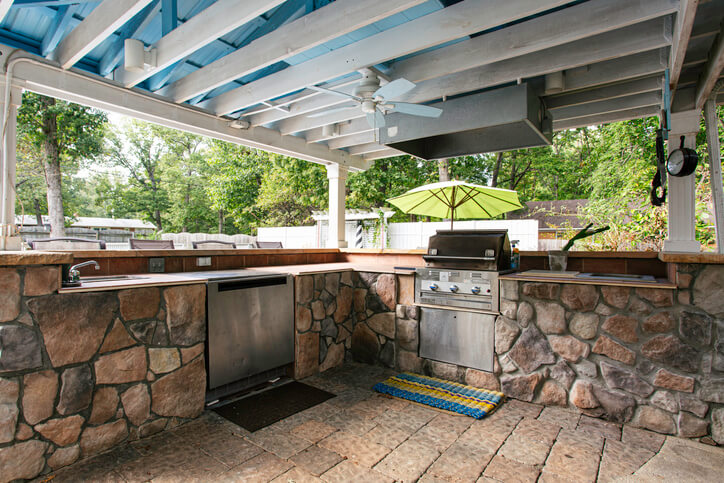


Designing an outdoor kitchen in Western Pennsylvania is about more than choosing what looks good on day one. Our region’s climate includes freezing winters, heavy rainfall, humid summers, and constant freeze-thaw cycles that can quickly expose weaknesses in poor material choices. That makes selecting the right construction materials one of the most critical decisions in the entire outdoor kitchen planning process.
At Treesdale Landscape Company, we design and build outdoor kitchens meant to last in Western PA conditions. Three materials consistently stand out for durability, performance, and visual appeal: concrete, natural stone, and brick. Each offers advantages depending on your goals, budget, and style preferences.
Concrete Outdoor Kitchens: Versatile and Cost-Effective
Concrete is one of the most commonly used materials for outdoor kitchen structures, and for good reason. When installed properly, it provides a strong, stable foundation that performs well in Western Pennsylvania’s unpredictable weather.
Pros of Concrete
Concrete offers excellent durability when reinforced and sealed correctly. It handles moisture, heat, and everyday wear very well, making it ideal for grill bases, countertops, and structural elements. One of its biggest advantages is flexibility. Concrete can be poured into almost any desired shape and finished in a variety of textures, stains, or colors to match both modern and traditional outdoor spaces. It is also generally more affordable than natural stone, especially for larger kitchens or custom layouts.
Cons of Concrete
The biggest concern with concrete in Western PA is cracking. Freeze-thaw cycles can cause expansion and contraction, which leads to surface cracks if the slab is not reinforced or sealed correctly. Concrete also requires periodic resealing to protect against stains and moisture penetration. While concrete can be visually appealing, some homeowners prefer the warmth and character of natural materials.
Concrete is a strong option for homeowners who want a customizable and budget-friendly outdoor kitchen and will invest in proper installation and maintenance.
Natural Stone Outdoor Kitchens: Timeless and Built to Last
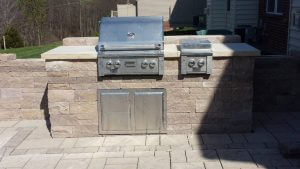
Natural stone is typically considered the gold standard for outdoor kitchens. Materials like granite, slate, limestone, and bluestone offer unmatched visual appeal and long-term durability.
Pros of Natural Stone
Natural stone performs exceptionally well in outdoor environments. It resists heat, moisture, and wear, making it ideal for countertops, facing materials, and high-traffic surfaces. Stone offers natural color and texture variation, creating a one-of-a-kind look and elevating the overall design of the outdoor space. When installed and sealed correctly, natural stone can last for decades with minimal maintenance.
Cons of Natural Stone
The primary drawback of natural stone is cost. Both the material itself and the labor required for installation are typically higher than for concrete or brick. Stone is heavy and requires a properly engineered base and experienced installers to ensure long-term stability. While maintenance is minimal, some stone types still benefit from periodic sealing.
Natural stone is best suited for homeowners who prioritize longevity, premium aesthetics, and long-term value over upfront cost.
Brick Outdoor Kitchens: Classic and Low Maintenance
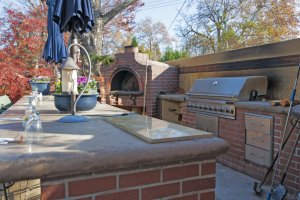
Brick remains a popular choice for outdoor kitchens, especially for homeowners who appreciate a traditional or rustic look that blends seamlessly with many Western Pennsylvania homes.
Pros of Brick
Brick is highly durable and naturally resistant to heat and moisture. It holds up well in humid summers and cold winters without fading or deteriorating. Brick requires very little ongoing maintenance and typically does not require frequent sealing. Its timeless appearance makes it an excellent option for homeowners who want an outdoor kitchen that will never feel dated.
Cons of Brick
Brick installation requires skilled masonry and often a concrete foundation, which can increase labor costs. Design flexibility is more limited compared to concrete or stone, and color options are generally restricted to traditional brick tones. While beautiful, brick does not offer the same range of customization as other materials.
Brick is a great option for homeowners who want a durable, low-maintenance outdoor kitchen with classic character.
Comparing Concrete, Natural Stone, and Brick
When comparing these materials side by side, each serves a different purpose depending on priorities. Concrete offers the most design flexibility and is typically the most budget-friendly option, but it requires proper reinforcement and maintenance to avoid cracking in freeze-thaw conditions. Natural stone provides the highest level of durability and visual impact, with minimal long-term maintenance, but comes at a higher cost upfront and also requires professional installation. Brick sits between the two, offering excellent durability and low maintenance with a timeless look, though it has fewer design options and still requires skilled masonry work.
The right choice depends on whether your primary goal is customization, luxury appeal, minimal upkeep, or cost control.
How Western Pennsylvania Weather Affects Outdoor Kitchen Materials
Western Pennsylvania’s climate places unique demands on outdoor kitchens. Moisture from snow and rain can seep into porous materials, and the repeated freezing and thawing can stress surfaces over time. Proper drainage, high-quality sealants, and experienced installation are critical regardless of which material you choose. Materials designed specifically for outdoor use, installed with our regional conditions in mind, will consistently outperform indoor products adapted for exterior spaces.
Why Material Selection Matters with Treesdale Landscape Company
At Treesdale Landscape Company, we design outdoor kitchens that are built for Western Pennsylvania, not just styled for it. We help homeowners choose materials that balance beauty, durability, and long-term performance while accounting for local weather challenges.
Whether you are drawn to the modern versatility of concrete, the elegance of stone, or the classic warmth of brick, our team ensures every outdoor kitchen is constructed with expert craftsmanship and lasting value in mind.
If you are planning an outdoor kitchen and want guidance on materials that truly hold up in Western PA, contact Treesdale Landscape Company to schedule a consultation and start designing an outdoor space that lasts.
